
Why KINISOPHY ?
How it all began...
_edited_edited_edited_edited_e.jpg)
KINISOPHY -
the origin.
KINISOPHY did not emerge from an idea, but from experience.
From the recurring realization that something essential is missing when movement is understood only as function, performance or a means to an end.
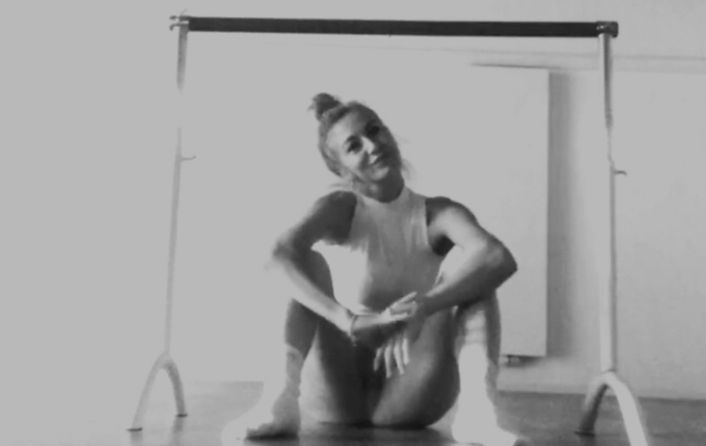
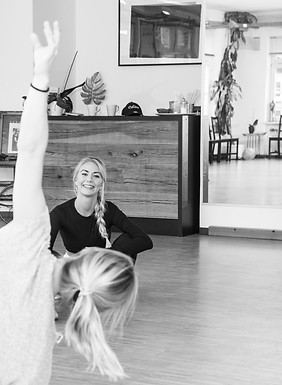
The first clear turning point appeared in my work as a dance teacher, particularly in one-to-one sessions for talent development. Again and again, I encountered people who wanted to learn how to dance. They were full of motivation, discipline and ambition. Yet before any sense of power, expression or quality in dance could unfold, something else became apparent: many had never truly learned how to move from within themselves. They lacked a sustainable connection to their own bodies. Only when movement itself, understood as perception, relationship and lived experience was given space, appeared what we later call dance.
This realization was no coincidence. It touched something that has accompanied me throughout my life.
Already during my own professional ballet education as a teenager, I felt an inner contradiction. Instead of growing closer to our bodies, we seemed to become increasingly distanced from them. The body became an object, a tool, a functional instrument - separated from thinking, separated from experience. This division is something I still observe today: people live either in their minds or in their bodies, but rarely in a genuine relationship with both. Early on, it became clear to me that movement is not only physical. It is always mental as well. Through movement, life becomes a lived experience.
Movement has been part of my life from the very beginning. My mother, a professional dancer, continued dancing while pregnant with me and I became a part of her moving life growing up behind the scenes of dance. Movement and dance became my source of strength, inspiration and a natural part of who I am. At the same time, my path led me into the world of business - a world in which work is almost exclusively mental.
From this, my inner conflict emerged. I was never able to choose one side over the other. When I worked more as a dancer or dance educator, I missed structure and intellectual challenge. When I worked more in the business world, I missed movement as a source of meaning, vitality and inner truth. It felt as though two hearts were beating in my chest and both needed space.
The thought that there must be a way to connect these two worlds never left me. Not as a compromise, but as a bridge. Over time, I realized that my own life path had prepared me precisely for this. It was less a conscious decision and more an inner calling.
KINISOPHY emerged from that calling.
For me, KINISOPHY stands for the wisdom of movement. The conviction that we need to learn to know and understand our bodies just as deeply as our minds, not as separate entities, but in relationship to one another. Movement becomes the connecting element: something holistic, meaningful and integrative.
KINISOPHY is grounded in three central pillars: awareness, understanding and integration of movement. The approach engages with fundamental themes such as posture, gait, mobility, strength, balance, coordination, locomotion and stillness - viewed isolated and in relation to the individual, their history and their unique conditions. KINISOPHY deliberately distances itself from a purely goal-oriented understanding of movement. Movement is not used as a tool to achieve outcomes. The focus lies on process-oriented experience. Paradoxically, goals are often reached more sustainably this way, but they are not the driving force. Experience is.
In observing training, coaching and teaching contexts, I have repeatedly noticed what is missing: before people are taught movement, they are rarely supported in finding their own individual access to it. Every body and every mind is unique. Each carries its own story. This is where KINISOPHY begins - before method or performance come into play.
KINISOPHY is for people who seek greater awareness, orientation and quality of life. For those searching for coherence and alignment in their lives. For those who want to experience self-efficacy, see themselves as active shapers of their lives, recognize meaning and learn to trust their inner voice.
My vision extends beyond the individual. I envision an attitude in which responsibility is experienced not as a burden, but as a source of strength. One in which joy in thinking emerges and posture and action are shaped consciously. A movement, in every sense of the word, that contributes to experiencing the world as a welcoming place.
I am aware that I was privileged: I never had to search for movement - I was born into it.
From this experience, I want to make movement tangible in a new way. Not as performance, but as meaning. As something we willingly engage with.
Perhaps this is also the selfish part of my vision - to create spaces in which people enjoy unfolding, where the individual feels like a valued part of a greater whole and where I, too, can continue to grow, within an environment shaped by awareness,moving forces and connection.
"Movement matters."
More awareness of movement - in the body, in the mind, in life.